
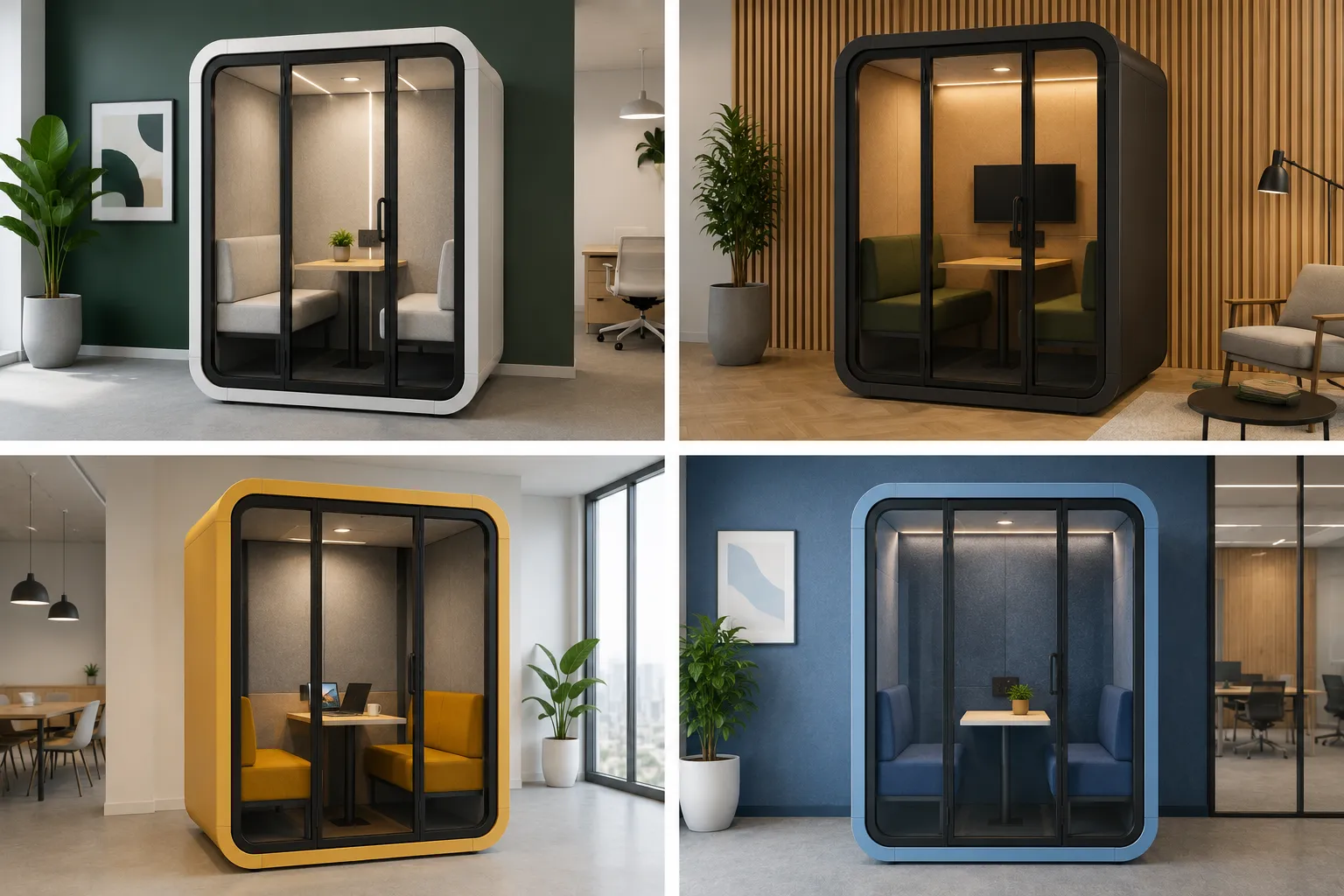
Businesses are constantly looking for ways to reduce overhead costs while creating productive workspaces. One area that often gets overlooked is the cost of meeting spaces. While traditional meeting rooms have long been a standard feature in offices, many companies are now considering meeting pods as a more flexible and cost-effective alternative.
The question is simple: which option saves more money in the long run?
The Cost of Building a Traditional Meeting Room
Creating a permanent meeting room involves more than adding a few walls. Businesses must account for construction costs, electrical work, ventilation, flooring, furniture, and potential planning requirements. For offices, these expenses can add up quickly.
In addition to the initial investment, traditional meeting rooms occupy valuable floor space. Since commercial office space comes at a premium, dedicating large areas to rooms that may sit empty for much of the day can be an expensive use of resources.
Maintenance costs should also be considered. Repairs, updates, repainting, and future renovations all contribute to the total cost of ownership.
Why Office Pods Are Becoming Popular
Modern office pods provide a ready-made solution that requires minimal installation. Businesses can introduce private meeting spaces without major construction work or lengthy office disruptions.
Many companies exploring soundproof office pods find that they offer a practical way to create quiet work environments while keeping office layouts flexible. Unlike fixed meeting rooms, pods can often be relocated if the office is redesigned or moved to a new location.
This flexibility helps businesses protect their investment over time.
Better Use of Office Space
Traditional meeting rooms are often designed for large groups, even though many meetings involve only two to four people. As a result, valuable office space is frequently underutilized.
Meeting pods are available in different sizes and can be selected based on actual usage requirements. This allows businesses to create more efficient office layouts while preserving space for collaborative work areas, employee desks, or future growth.
For companies paying high commercial rents, maximizing every square metre can lead to substantial savings.
Lower Installation and Downtime Costs
Constructing a traditional meeting room can take weeks. During this period, sections of the office may become inaccessible, creating disruption for employees and daily operations.
Pods arrive as finished units and can often be installed within a short timeframe. Businesses avoid lengthy construction projects, reduce downtime, and continue operating with minimal interruption.
This is especially valuable for growing companies that cannot afford workplace disruptions.
Energy and Operational Savings
Traditional meeting rooms require dedicated lighting, heating, cooling, and ongoing maintenance. These costs continue throughout the life of the room.
Many modern pods are designed with energy-efficient lighting and ventilation systems that operate only when the space is in use. This can reduce overall energy consumption and contribute to lower operating expenses.
While individual savings may seem small, they can become significant over several years.
The Value of Flexibility
Business needs rarely stay the same. Teams expand, departments change, and office layouts evolve. Traditional meeting rooms are permanent structures that can become inefficient as workplace requirements shift.
A meeting pod offers flexibility that conventional rooms cannot match. If a business relocates or redesigns its workspace, the pod can often move with it. This adaptability helps businesses avoid future construction costs and maintain a more agile workplace.
Which Option Saves More Money?
For organisations that require large boardrooms for regular client presentations or executive meetings, traditional meeting rooms may still have a place. However, for most day-to-day meetings, private calls, and collaborative discussions, meeting pods often deliver better value.
They typically require lower upfront investment, reduce construction expenses, use office space more efficiently, and provide flexibility that traditional meeting rooms cannot offer.
Conclusion
When comparing total ownership costs, meeting pods often emerge as the more economical solution for modern workplaces. They help businesses reduce construction expenses, improve space utilisation, and adapt to changing office requirements without costly renovations.
As companies continue to seek smarter workplace solutions, meeting pods are becoming an increasingly attractive alternative to traditional meeting rooms, particularly in high-cost office markets.