
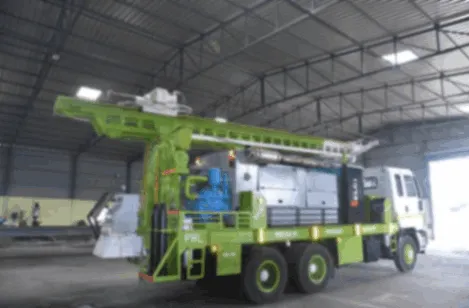
Compressed air is the driving force behind down-the-hole (DTH) drilling, powering the hammer and clearing broken rock from the borehole. The right compressor capacity directly affects drilling speed, hole cleaning, and overall equipment performance. When selecting drilling rigs, understanding airflow and pressure requirements is essential for matching the equipment to site conditions.
A compressor with unsuitable capacity can slow operations and affect drilling efficiency. Evaluating the required air supply before starting a project helps operators make informed equipment decisions and maintain consistent performance.
Role of Compressed Air in DTH Drilling
In DTH drilling, compressed air travels through the drill string to operate the hammer near the bit. The hammer uses repeated impacts to break rock, while returning air carries cuttings towards the surface.
The required air supply depends on hammer specifications, hole diameter, drilling depth, and the formation being penetrated. Compressor selection must match the rig configuration.
Key Capacity Requirements
Compressor capacity is assessed through airflow and working pressure. Airflow is commonly measured in cubic feet per minute (CFM), while pressure is measured in PSI or bar. Pressure operates the hammer, while airflow supports its action and removes debris.
When comparing drilling rigs, operators should check rated output under working conditions, not only the maximum advertised figure. Capacity must also account for pressure losses through hoses, pipes, and connections.
1. Airflow Volume
Airflow describes the amount of air delivered over time. The hammer and borehole dimensions influence the volume required. Insufficient airflow can reduce hammer efficiency and leave cuttings in the hole, slowing penetration.
2. Operating Pressure
Pressure determines whether the hammer receives enough force to function correctly. The required range depends on tool specifications; incorrect pressure affects performance and component life.
3. Hole Diameter and Depth
Larger holes and deeper drilling may require more air to operate the hammer and clear cuttings. Longer drill strings can increase pressure losses. Capacity planning should reflect the complete hole design.
4. Rock Formation
Hard or fractured formations influence drilling resistance and the air needed for effective cleaning. Ground conditions should be considered alongside hammer and bit selection. Settings may need adjustment as formations change.
5. System Compatibility
The compressor, hammer, drill string, and bit must work as a coordinated system. Matching specifications helps prevent restrictions and inefficient operation. Reviewing the configuration helps prevent performance issues.
Operational Checks and Maintenance
Regular checks help maintain compressor output. Operators should inspect filters, air lines, couplings, coolers, and lubrication systems according to the maintenance schedule. Leaks or blocked filters can reduce airflow even when the compressor is running.
Pressure and temperature monitoring can reveal leaks or mechanical issues. A suitable drilling rig machine should be assessed as a complete system, including compressor service requirements and operating limits.
Conclusion
Compressor capacity affects hammer operation, cuttings removal, and DTH drilling efficiency. Matching airflow and pressure to the tool, hole design, and geological conditions supports reliable performance while helping avoid unnecessary fuel use and wear. Routine inspection helps maintain the required air supply.
For businesses assessing equipment for ground conditions, Prime Rigs offers truck-mounted and skid-mounted rigs with compressors for different drilling requirements. Its PDTHR-300 features an ELGI compressor rated at 1,100 CFM and 300 PSI, while the PDTHR-400 offers an ELGI/Atlas Copco compressor rated at 1,200 CFM and 330 PSI. These specifications help buyers compare airflow and pressure when selecting a suitable drilling rig machine for their project.