
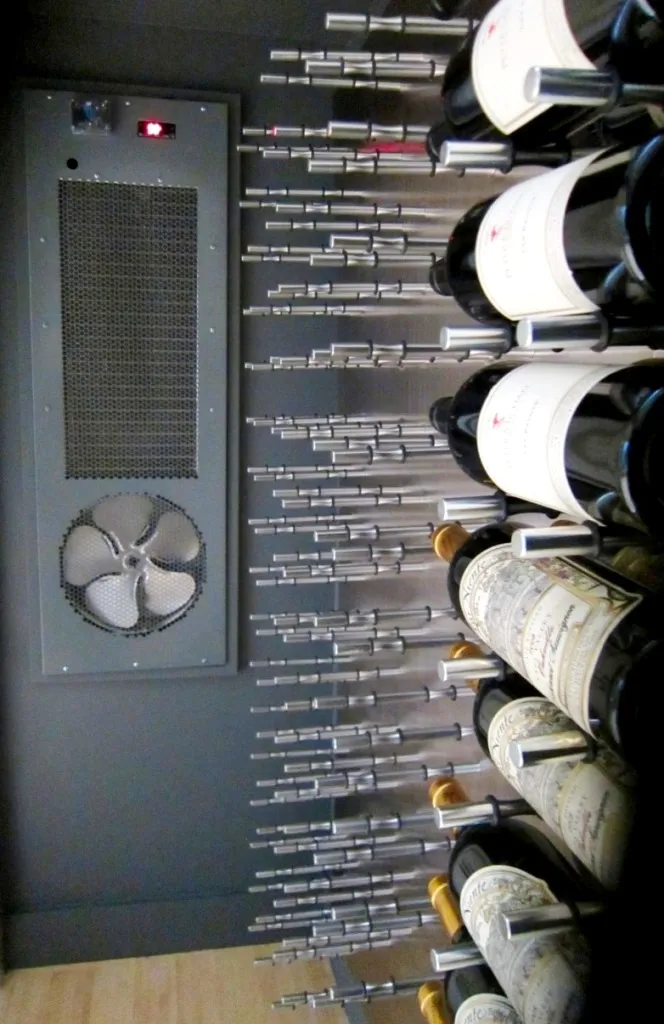
Glass can turn a wine cellar into part of the surrounding interior, but it also changes the design problem. A transparent wall or door exposes the collection visually while the room still needs to maintain a controlled environment. Those two goals should be resolved together, not handed to separate stages of the project.
The practical starting point is the enclosure. Room size, glass area, surrounding temperature, sun exposure, door use, and insulation all influence the load placed on climate-control equipment. A cooling decision made before those facts are known is only a guess.
Treat the Enclosure as Part of the Mechanical Plan
Cooling equipment does not work in isolation. The walls, ceiling, floor, and entrance determine how much heat and moisture the system must manage. A beautifully designed room can struggle if the enclosure leaks conditioned air or receives more heat than expected.
When evaluating a wine cellar cooling system, the useful conversation includes the whole room. Equipment capacity, airflow, noise, drainage, and service access should be considered alongside the materials that enclose the collection.
Use Glass Where the View Is Worth It
Not every wall needs to be transparent. Glass has the most value where it creates a meaningful view from a hallway, dining area, or entertaining space. An opaque wall elsewhere may provide better opportunities for dense storage and a simpler environmental envelope.
Selective transparency also gives the room a clearer focal point. Instead of seeing the entire cellar from every direction, the viewer receives a composed view through one opening. That can make a smaller collection feel more intentional.
Control What the Glass Reveals
A transparent entrance shows more than bottles. Equipment grilles, cords, unfinished corners, and storage clutter can become part of the view. The racking layout and service areas should be planned with that exposure in mind.
Reflections deserve attention too. Bright ceiling lights or windows behind the viewer may obscure the collection. Testing sightlines and light positions before final installation helps keep the glass from acting like a mirror when it is supposed to frame the room.
Give the Door a Mechanical Job as Well as a Visual One
The entrance is one of the most frequently used parts of the enclosure, so fit and closure matter. Hardware, threshold details, and how the door meets the surrounding frame should support repeated daily use.
With modern glass wine cellar doors, the design also affects what people see before they enter. Door position, handle placement, and the first visible rack wall can be coordinated to make the opening feel like part of the composition.
Plan Airflow Around the Racks
A dense wall of bottles can interfere with circulation if the equipment and racking are planned separately. Return and supply paths should not be blocked by decorative panels or deep storage that prevents air from moving through the room.
This is another reason to coordinate mechanical planning early. Small adjustments to rack depth, equipment location, or open space near the ceiling may support a more stable environment without changing the visual concept in any noticeable way.
Think About Maintenance Before Hiding Everything
A clean display room often encourages designers to conceal mechanical components. Concealment is useful, but technicians still need to reach filters, drains, controls, and equipment. A removable panel is usually better than a beautiful surface that has to be dismantled for service.
The same principle applies to cleaning the glass. Leave enough physical access to reach both sides safely where possible. A design that looks pristine in a rendering should still be practical to maintain after fingerprints, dust, and everyday use become part of the routine.
Watch the Room Through a Full Daily Cycle
Conditions around a glass cellar can change between morning and evening. Sunlight may cross the opening at one time of day, nearby rooms may warm up during gatherings, and the door may be opened more frequently during entertaining. Those patterns are useful information for the design team.
Even a brief observation period can reveal whether a planned glass wall receives direct sun or whether a nearby vent changes the local temperature. The objective is not to predict every condition perfectly, but to avoid designing the enclosure around a single moment that is not representative of normal use.
Conclusion
Glass and cooling are not competing priorities when they are planned together. A clear view can remain the architectural focus while the enclosure, airflow, and equipment quietly support the conditions required by the collection.
Homeowners considering a transparent wine room can explore projects at customwinecellarsorangecounty.com and use them to ask practical questions about visibility, enclosure performance, equipment access, and long-term maintenance.