

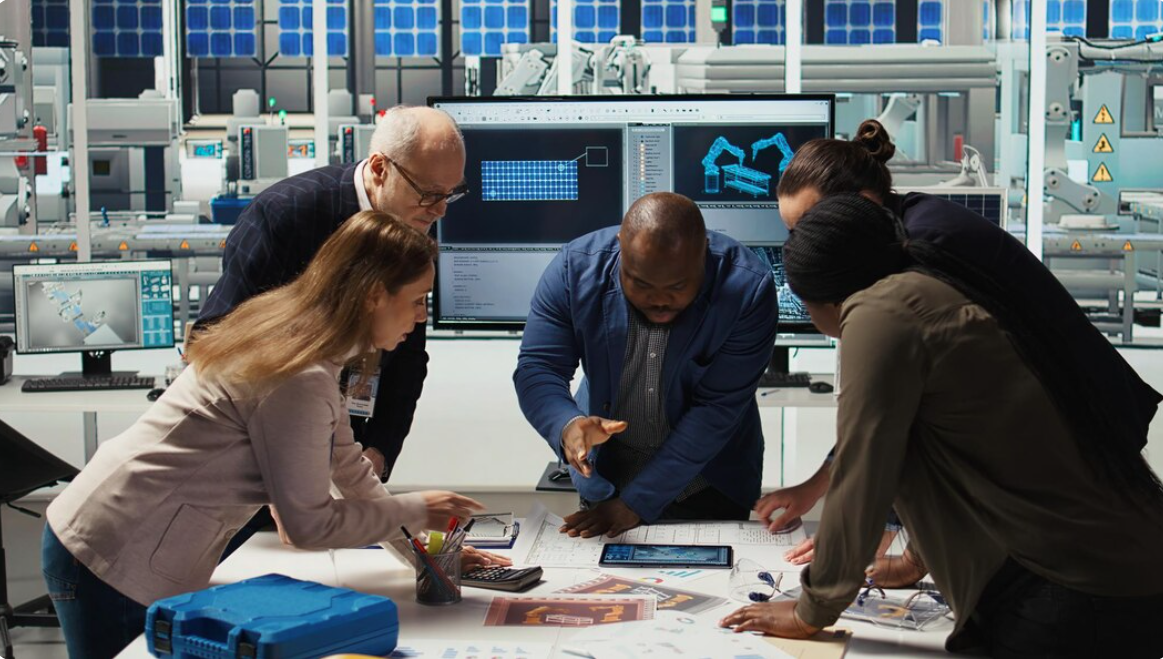
The story of technological progress has often been told as one of individual breakthroughs, one company, one lab, one idea sparking the subsequent development. Yet the reality of modern innovation is far more interconnected. The most critical advances in semiconductors no longer come from isolated efforts, but from the sharing of knowledge between once separate disciplines. Physics meets chemistry, data science meets material research, and design meets artificial intelligence. Erik Hosler, a veteran strategist recognized for fostering partnerships that connect to technology sectors, acknowledges that the key to sustained progress lies in uniting expertise across boundaries. His insight reflects the growing understanding that collaboration, not competition, now drives the pace of semiconductor development.
This shift is changing how the industry defines innovation. Progress used to depend on the shrinking of transistors and the refinement of lithography. Today, it largely depends on effective communication and how well different teams and technologies connect. From academic research partnerships to global manufacturing alliances, success now rests on how ideas flow across disciplines. The most meaningful discoveries emerge not from a single spark, but from a constellation of minds working in sync.
Breaking the Boundaries of Specialization
For decades, engineering excellence relied on deep specialization. Experts focused on narrower domains to master the complex science of chipmaking. However, the challenges facing modern semiconductors, including quantum effects, energy constraints, and material limits, are too broad for any single field to solve alone. Collaboration has become a necessity rather than a luxury.
Design engineers now work alongside chemists who study atomic interactions, while AI specialists develop algorithms to predict process outcomes. The combination of these perspectives produces solutions that no single discipline could achieve independently. This interdependence has turned research labs and foundries into ecosystems where ideas evolve through constant exchange.
Cross-disciplinary innovation replaces the old hierarchy of expertise with a network of cooperation. It creates a dynamic environment where insight from one domain instantly reshapes another, accelerating progress beyond the scope of traditional specialization.
Where Science Meets Strategy
The semiconductor industry is not only a scientific field but also a strategic one. Each advancement requires coordination between multiple layers of expertise, from material formulation to manufacturing optimization to user experience design. This complexity necessitates a strategic approach to collaboration.
Companies that understand how to connect disciplines gain an advantage that technology alone cannot provide. When AI-driven analytics meet photonic engineering or when material scientists align with data architects, entirely new solutions emerge. The process becomes less about pushing one frontier forward and more about weaving many threads together into a stronger fabric of innovation.
This approach reflects the values of open exchange over guarded independence. In an era where problems are global and interlinked, collaboration has become the most advanced form of competition.
Shared Knowledge, Shared Progress
Partnerships between institutions and industries have transformed the process of translating research from concept to application. University labs collaborate with semiconductor giants to explore new materials, while startups bring agility and fresh thinking to established manufacturing processes. Even rival companies are finding common ground in pre-competitive research that benefits the entire ecosystem.
These collaborations create a feedback loop that strengthens innovation at every stage. Discoveries in material science led to new manufacturing methods. Insights from data analytics refine production efficiency. AI models improve predictive accuracy for chip design. The progress of one field amplifies the growth of another.
The Human Side of Integration
Cross-disciplinary progress depends not only on knowledge sharing but also on the people who make it possible. Building trust between teams with different priorities, languages, and goals requires empathy and communication. Engineers must learn to explain complex concepts to chemists, physicists, software developers, business leaders, and scientists.
This human integration mirrors the technological one. Just as chips combine logic, memory, and connectivity into a cohesive system, the innovation process relies on the unity of diverse human talent. When people with distinct skill sets work toward a common goal, their collaboration becomes an act of design, constructing not just better technology but a more connected creative process.
Innovation Across Sectors
Collaboration extends far beyond the semiconductor field itself. Advances now emerge from the intersections between industries once considered unrelated. Semiconductor technologies draw insights from biotechnology, renewable energy, and even neuroscience. These exchanges reveal new approaches to miniaturization, energy efficiency, and data processing.
Erik Hosler says, “It’s going to involve innovation across multiple different sectors.” His words reflect that the next breakthroughs depend on how effectively these fields intersect. By learning from energy systems, healthcare devices, and communication networks, chip designers find inspiration in unexpected places. Each connection expands the creative horizon, enabling technology to evolve in ways that no single industry could have imagined on its own.
Integration as an Art Form
The modern semiconductor is a masterpiece of integration. It combines the precision of materials science, the vision of design, and the intelligence of machine learning into one cohesive structure. The process of creating it resembles an orchestra more than an assembly line, with each section contributing its own rhythm and tone.
AI refines architectures, photonics expands communication speed, and new materials enhance efficiency. The artistry lies in balance. Too much focus on one domain risks limiting potential, while harmony among all disciplines creates systems that feel both complex and effortless. Therefore, cross-disciplinary innovation represents not only scientific progress but also creative development. It turns engineering into a collaborative art that continuously redefines the possible.
A Landscape Shaped by Collaboration
The future of semiconductor progress no longer follows a single roadmap. It unfolds through interaction between people, disciplines, and ideas. Industry advances not through isolated achievement but through shared momentum. Each contribution, no matter how small, becomes part of a collective design that drives technology forward.
This cooperative spirit has redefined what innovation means. Progress depends on curiosity that crosses boundaries, humility that values other expertise, and imagination that sees patterns across unrelated fields. The semiconductor story is no longer about one idea outpacing another, but about many ideas converging to create something none could achieve alone. The landscape of progress is shaped by connection, proving that the most powerful breakthroughs happen not in isolation, but in conversation.